The consumer electronics market moves fast. New product cycles are shorter than ever, customer expectations are sky-high, and a single logistics misstep — a damaged shipment, a missed delivery window, a bungled return — can cost you not just a sale but a loyal customer. That’s why electronics fulfillment outsourcing to the right third-party logistics (3PL) provider isn’t just a cost decision. It’s a strategic one.
The stakes are enormous. According to market research, the global 3PL for consumer electronics market was worth around $124.67 billion in 2024 and is projected to reach $338.36 billion by 2034, growing at a CAGR of 10.5%. That trajectory reflects just how deeply brands are leaning on strategic logistics partnerships to stay competitive.
So how do you separate the right partner from the rest? This guide walks you through the critical criteria for choosing a 3PL that can handle the unique demands of supply chain electronics — from ensuring secure packaging to streamlining fulfillment processes and enhancing customer experience across every channel.
1. Deep Expertise in Electronics Distribution Management
Not all 3PLs are built the same. Consumer electronics present a distinct set of challenges: high-value products, sensitivity to static and moisture, short product lifecycles, strict compliance requirements, and intense demand volatility around product launches and holiday peaks.
When evaluating a logistics provider, look for documented experience specifically in electronics distribution management. This means familiarity with ESD (electrostatic discharge) protocols, serialized inventory tracking (IMEI/serial numbers), handling of bundled or kitted products, and compliance with FCC, RoHS, and other applicable regulations.
Questions to ask:
- What percentage of your current clients are in the consumer electronics space?
- How do you manage serialized inventory and product traceability?
- Can you provide case studies showing peak-season scalability for electronics brands?
A warehouse partner with proven electronics experience will already have systems in place to handle fragile, high-theft-risk items — and won’t need to learn on the job with your inventory.
2. Ensuring Secure Packaging for High-Value Products
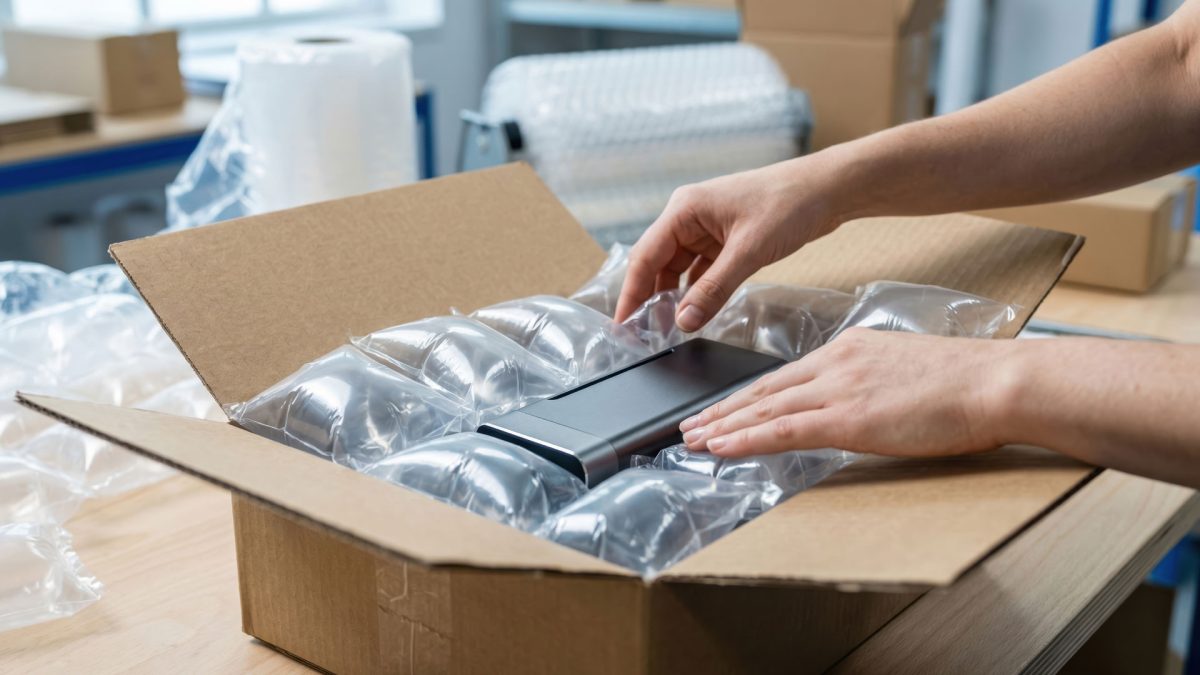
Consumer electronics are fragile and expensive. Your 3PL must have the capability and protocols for ensuring secure packaging — not just standard corrugated boxes, but anti-static bags, foam inserts, moisture-barrier materials, and custom-fit cushioning appropriate for the product. Electronics that are improperly packed don’t just generate returns; they generate brand damage.
The consumer electronics packaging market itself is growing rapidly — from $25.89 billion in 2024 to $29.01 billion in 2025 — a signal that brands are investing more in protective solutions. Your 3PL should be keeping pace.
Look for a provider that offers:
- ESD-safe packaging materials and procedures
- Custom kitting and bundling for new product launches
- Climate-controlled or humidity-regulated storage for sensitive components
- Tamper-evident packaging and anti-theft measures for premium devices
3. Automation Fulfillment Technology and Real-Time Visibility
Modern electronics fulfillment is driven by data. The best 3PL providers invest heavily in automation fulfillment technology — warehouse management systems (WMS), transportation management systems (TMS), robotics, and RFID-based tracking — that reduce errors, increase throughput, and provide real-time visibility into inventory and order status.
AI adoption in logistics operations is accelerating. From demand forecasting to automated shipment processing, AI tools directly reduce stockouts, overstocking, and costly fulfillment errors.
When evaluating technology capabilities, prioritize:
- Real-time visibility: Can you see inventory levels, order status, and shipment tracking from a single dashboard, accessible via API or web portal?
- Demand forecasting: Does the WMS integrate predictive analytics to help you plan for product launches and seasonal spikes?
- Order management integration: Can the platform connect seamlessly with your eCommerce platforms (Shopify, Amazon, WooCommerce) and ERP systems?
- Automated shipment processing: How are pick-pack-ship workflows handled — manually or through robotics-assisted automation?
For electronics brands, where SKU counts are high and product configurations complex, the gap between a tech-forward 3PL and an outdated one shows up directly on your bottom line.
4. Omnichannel Fulfillment Solutions for Modern Retail
Consumer electronics are sold everywhere — your own D2C website, different online marketplaces, retail partners, corporate B2B channels, and physical stores. Your 3PL needs to serve all of these, not just one.
Omnichannel fulfillment solutions mean your 3PL can manage inventory across multiple sales channels from a single pool, route orders to the right facility, and meet the distinct compliance requirements of each channel.
Key capabilities to look for:
- Flawless prep services
- Retail compliance labeling for major big-box partners
- B2B order handling with pallet-level shipping and EDI integration
- D2C order fulfillment with branded packaging options
- Cross-docking capabilities for rapid retail replenishment
Without omnichannel fulfillment capabilities, brands end up splitting inventory across multiple partners — increasing cost, complexity, and the risk of out-of-stock situations on their highest-volume channels.
5. Improving Delivery Speed Without Sacrificing Accuracy
Consumers expect fast delivery. For electronics — where purchases are often time-sensitive, gifted, or tied to a new product launch — delivery speed is non-negotiable. But speed without accuracy creates its own problems: mispicks, wrong configurations shipped, and missing accessories all generate returns and damage customer trust.
When evaluating a 3PL’s ability to deliver on improving delivery speed, consider:
- Strategic warehouse location: Are fulfillment centers positioned near your customer concentration to enable 1-2 day ground delivery to most of the continental U.S.?
- Carrier network breadth: Does the provider have relationships with multiple carriers (UPS, FedEx, USPS, regional carriers) to optimize speed and cost per shipment?
- Order cutoff times: How late in the day can orders be placed and still ship same-day?
- SLAs on order accuracy: What pick-pack accuracy rate does the provider guarantee, and how is it measured?
The best electronics fulfillment providers balance speed with precision, using barcode scanning, cycle counting, and quality control checkpoints to ensure the right product ships in the right configuration every time.
6. Managing Returns and Reverse Logistics
Returns are an inescapable reality of electronic commerce operations. According to NRF, U.S. retail returns totaled $849.9 billion in 2025 — and nearly 49% of retailers are increasing their focus on third-party logistics partners to handle returns efficiently. For electronics specifically, returns involve more complexity: devices must be inspected, tested, repackaged, and either returned to sellable inventory, refurbished, or properly disposed of.
A capable 3PL partner must have a well-defined process for managing returns and reverse logistics, including:
- Graded inspection and condition assessment (A/B/C stock)
- Refurbishment and repackaging workflows
- Serialized return tracking tied to original order records
- Data destruction services for returned devices with stored personal data
- Disposition reporting and liquidation coordination for unsalvageable units
Consider that 71% of consumers say they are less likely to shop with a retailer again after a poor returns experience. A 3PL that handles reverse logistics well isn’t just protecting your margins — it’s protecting your customer relationships.
7. Optimizing Inventory and Scalability
Electronics brands face extreme demand volatility. A flagship smartphone launch, a viral product moment, or a holiday spike can multiply order volume overnight. Conversely, end-of-life products can lose value rapidly if they sit in a warehouse too long. Your 3PL must be equipped for both.
Optimizing inventory within a 3PL relationship involves:
- Visibility into aging inventory so you can act before value depreciates
- Flexible storage pricing that doesn’t penalize you during slow periods
- Distributed inventory across multiple fulfillment nodes to reduce transit times
- Ability to scale labor and space quickly during product launches or Q4 peaks
Ask prospective partners about their capacity headroom both in physical warehouse space and fulfillment labor. A 3PL that can’t scale with you will become a bottleneck at the worst possible moment.
8. Transparency, Communication, and Partnership Quality
The best logistics services aren’t just transactional — they’re genuinely collaborative. Look for a 3PL that assigns dedicated account management, conducts regular business reviews, and proactively surfaces issues rather than waiting for you to find them.
Indicators of a strong logistics partnership:
- Dedicated account manager with electronics industry knowledge
- Regular operational reviews with KPI reporting (fill rates, on-time delivery, accuracy, damage rates)
- Proactive communication about carrier delays, capacity constraints, or inventory discrepancies
- Willingness to invest in client-specific workflows and system integrations
- Clear SLAs with defined remedies if performance falls short
Strategic logistics partnerships are built on trust and transparency. If a provider is reluctant to share performance data or resistant to custom requirements, that’s a signal worth heeding before you’ve committed your inventory to their facility.
Electronics Fulfillment 3PL Evaluation Checklist
Before signing with a logistics provider, ensure they can demonstrate:
- Documented experience in electronics distribution management
- Secure, ESD-safe packaging capabilities
- Technology stack with real-time visibility and automation
- Omnichannel fulfillment solutions across D2C, marketplace, and retail
- Fast, accurate order handling with strong carrier relationships
- Structured reverse logistics for managing returns
- Scalable capacity for demand peaks
- Transparent SLAs, reporting, and account management
Why XPDEL for Consumer Electronics Fulfillment
XPDEL is purpose-built for brands that need more from their fulfillment partner. With a network of strategically located fulfillment centers across North America, deep technology integrations, and end-to-end capabilities spanning order management, delivery solutions, and reverse logistics, XPDEL helps electronics brands deliver with speed, precision, and confidence — at every stage of the supply chain.
Whether you’re scaling a D2C brand, managing a complex omnichannel retail network, or launching a new product line, XPDEL has the infrastructure and expertise to power your electronics fulfillment operations.
Frequently Asked Questions (FAQs)
Q-1. What makes electronics fulfillment different from standard eCommerce fulfillment?
Ans. Consumer electronics require specialized handling at every stage — from anti-static packaging and serialized inventory tracking to strict compliance labeling and structured reverse logistics for returned devices. Electronics are high-value, theft-prone, and sensitive to environmental factors like humidity and static discharge. A general-purpose fulfillment center may not have the protocols, trained staff, or secure facilities that electronics brands need to protect product integrity and customer trust
Q-2. How important is real-time inventory visibility for electronics brands?
Ans. Extremely important. Electronics have short product lifecycles, rapid demand shifts, and significant value depreciation. Real-time visibility into inventory levels, inbound freight, order status, and returns allows brands to make faster decisions — whether that means reallocating stock to a high-demand region, triggering a reorder, or identifying a quality issue before it generates a wave of returns. A 3PL without live inventory data is a liability in a market that moves as fast as consumer electronics.
Q-3. How should electronics brands think about managing returns and reverse logistics?
Ans. Returns in electronics are inevitable — and they carry higher stakes than most categories. Returned devices may contain personal data, could be refurbished and resold, or might require certified disposal. Electronics brands should look for a 3PL that offers graded inspection (assessing whether a unit is A-stock, B-stock, or waste), serialized return tracking, data-wiping services, and clear disposition reporting. A well-managed returns process recovers value from returns rather than just absorbing the cost.
Q-4. What should I look for in a 3PL’s technology stack?
Ans. At minimum, look for a cloud-based warehouse management system (WMS) with real-time inventory tracking, native integrations with major eCommerce platforms (Amazon, Shopify, WooCommerce), EDI capabilities for retail partners, and a client-facing portal for order and shipment visibility. Advanced providers will also offer demand forecasting, AI-driven fulfillment optimization, and automated shipment processing that reduces errors and speeds up order cycle times.
Q-5. How do I evaluate a 3PL’s ability to scale during peak demand periods?
Ans. Ask directly: What is your current warehouse utilization rate? What is your maximum capacity? How do you manage labor during peak periods like Q4 or a product launch? A credible 3PL will have documented scalability plans, cross-trained fulfillment staff, relationships with flex-labor providers, and potentially multiple fulfillment nodes to distribute volume. Request references from existing clients who have experienced significant volume spikes, and ask how the provider performed against SLAs during those periods.
