Warehouses that rely on outdated case picking processes are quietly bleeding time, money, and customers. In a world where speed and accuracy define fulfillment success, how you pick is just as important as how fast you ship. Optimize your case picking — and everything downstream gets better.
The pace of modern commerce continues to accelerate, and customers now expect fast deliveries, accurate orders, and seamless service across both eCommerce and B2B channels. Whether businesses are leveraging eCommerce fulfillment services in the USA, managing B2B logistics services, or replenishing retail store inventory, speed and accuracy are essential to staying competitive.
At the center of efficient warehouse operations is case picking, a process that directly impacts fulfillment speed, accuracy, and productivity. When case picking processes are inefficient, warehouses often face delays, errors, and higher operational costs.
However, a well-optimized case picking strategy helps warehouses move products faster, reduce handling time, and maintain smoother fulfillment operations. For businesses shipping full cases to retailers or partnering with an eCommerce fulfillment company in the USA, efficient case picking plays a key role in improving operational performance and delivering a better customer experience.
Understanding Case Picking in Warehouse Operations
Case picking is a warehousing method where entire cases of products are selected and moved to fulfill customer orders. It is especially effective for high-volume orders, wholesale distribution, and retail restocking.
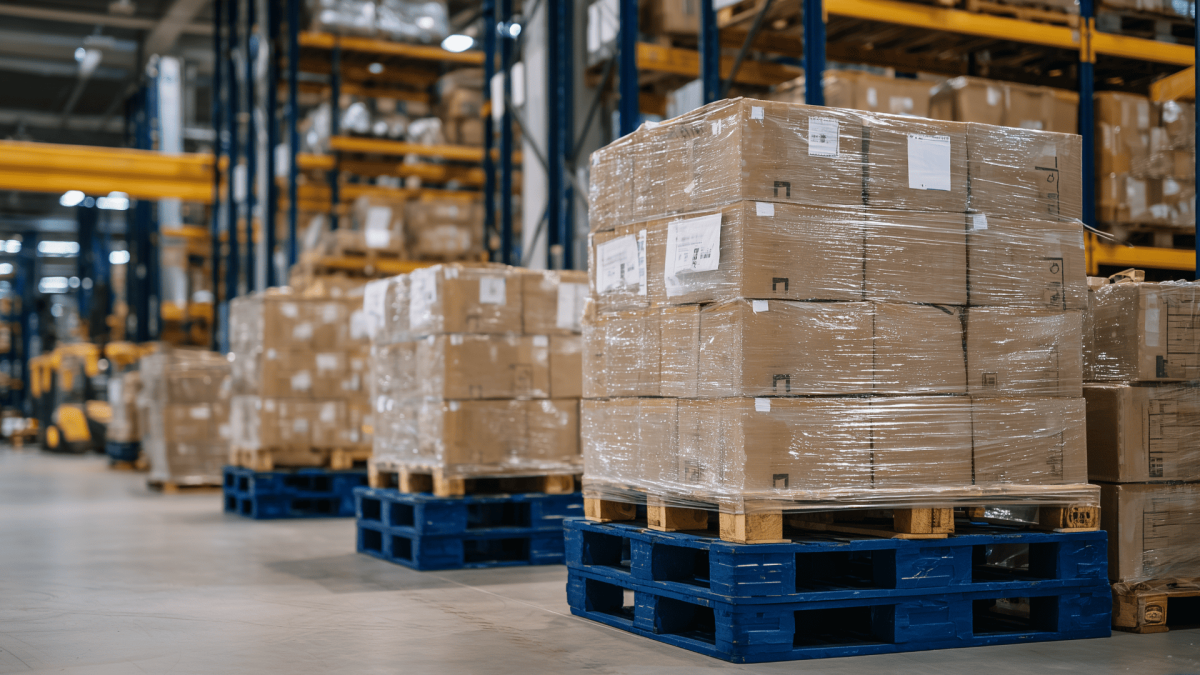
In contrast to piece picking, where individual items are selected from shelves or bins, case picking involves handling full, pre-packaged cases that contain multiple units of the same SKU. These cases are typically stored on pallets or within racking systems designed to allow quick access and efficient retrieval, enabling warehouses to move larger quantities of products through the fulfillment process with greater speed and consistency.
Case picking is commonly used in warehouse operations when:
- Fulfilling large B2B & D2C logistics orders that require multiple units of the same product.
- Replenishing retail store inventory, where full cases are shipped directly to individual store locations.
- Processing bulk orders for products that are frequently purchased in higher quantities.
For example, a warehouse supplying office products may receive an order from a corporate distributor for 15 cases of printer paper. Instead of picking individual reams, the warehouse team simply retrieves the required number of pre-packaged cases from pallet storage and prepares them for shipment, allowing the order to be processed faster and with fewer handling steps.
Why Case Picking Matters More Than Ever
The surge in online shopping and omnichannel retail has heightened fulfillment challenges, requiring businesses to handle diverse orders — such as eCommerce, B2B, and store replenishment — while meeting higher speed and accuracy standards. As order volumes grow, efficient warehouse picking becomes crucial to overall performance. For order fulfillment companies in the USA, this efficiency is no longer optional — it is a competitive necessity.
- Impact on Fulfillment Speed: Efficient case picking accelerates the movement of bulk items from storage to shipping, leading to faster order processing and shorter delivery times.
- Impact on Warehouse Efficiency: Effective case picking streamlines operations by minimizing unnecessary movement, boosting workforce productivity, and optimizing warehouse space utilization across US fulfillment centers.
- Impact on Customer Experience: Customers expect accurate and timely deliveries. Optimizing case picking enhances operational efficiency, customer satisfaction, and ROI, while errors and delays can harm trust and reputation.
Common Challenges in Case Picking
Here’s what most brands miss when they talk about fast shipping: customers don’t just want fast. They want certain.
62% of consumers say an accurate estimated delivery date is more important than fast shipping. You can get a package to someone in two days — but if you promised one and delivered two, you’ve still broken trust.
This is why fast fulfillment without operational accuracy is just a faster way to disappoint people. The brands winning on delivery aren’t just moving packages quickly. They’re making promises they can actually keep — every time.
What It Actually Takes to Deliver Fast at Scale
Although case picking helps streamline high-volume order fulfillment, many warehouses struggle to implement it efficiently. Several operational challenges can limit its effectiveness and slow down overall warehouse performance:
One of the most common issues is an inefficient warehouse layout. When products are not organized based on demand or picking frequency, workers must travel longer distances across the warehouse, increasing picking time and reducing productivity.
Another challenge is the heavy reliance on manual processes. Paper-based picking lists and manual verification increase the likelihood of errors such as selecting the wrong product or incorrect quantities, which can lead to delays, returns, and additional operational costs.
A lack of real-time inventory visibility also creates inefficiencies. Without accurate, up-to-date inventory data, warehouse teams may waste time searching for items that appear to be in stock but are unavailable or misplaced.
Poorly optimized picking routes can further slow operations. When pick paths are not well designed, workers may move back and forth across the warehouse instead of following a streamlined route, leading to unnecessary travel time.
In addition, unclear workflows and workforce coordination can reduce productivity. When employees lack clear instructions or defined picking processes, it can result in confusion, uneven workload distribution, and slower order processing.
Finally, many warehouses operate with limited technology or without a robust warehouse management system (WMS). Without digital tools to guide picking, track inventory, and optimize workflows, maintaining speed and accuracy becomes far more difficult.
Together, these challenges can create operational bottlenecks, slow fulfillment, and ultimately impact customer satisfaction — particularly for businesses relying on USA fulfillment centers to meet tight delivery windows.
Strategies to Optimize Case Picking for Faster Fulfillment
Improving case picking efficiency requires a balance of better processes, smarter warehouse design, and the right technology.
- Optimize Warehouse Layout: A well-organized fulfillment center in the USA can significantly reduce picking time. Placing high-demand products in easily accessible locations and closer to shipping zones helps minimize unnecessary travel and speeds up order processing.
- Standardize Picking Processes: Clear and consistent workflows help warehouse teams work faster and with fewer errors. Standardizing case picking procedures ensures everyone follows the same process, improving both productivity and accuracy.
- Use Technology to Improve Visibility: A reliable warehouse management system (WMS) can streamline case picking by providing real-time inventory visibility, assigning tasks automatically, and guiding pickers through optimized routes.
- Align Picking with the Right Fulfillment Model: Different order types require different picking approaches. While B2B logistics services often benefit from full-case picking, B2C logistics services and eCommerce orders may require more flexible picking strategies. Aligning the method with order type improves overall efficiency.
- Invest in Workforce Training: Well-trained warehouse teams play a crucial role in efficient case picking. Providing training on systems, workflows, and safety practices helps improve both speed and accuracy on the warehouse floor.
When Should Businesses Rethink Their Case Picking Strategy?t
Businesses should reassess and refine their case picking strategy as soon as operational inefficiencies begin to surface. Key warning signs often include:
- Rapid growth in order volumes that existing processes struggle to handle
- A rise in customer complaints related to order accuracy or delivery times
- Shipment delays or slower order processing
- Frequent inventory discrepancies
- Expansion into new markets that increases fulfillment complexity
The Bottom Line: Fast Fulfillment is a Decision, Not a Default
The brands pulling away from the competition right now made a deliberate choice — probably a year or two ago — to treat fulfillment as a core part of their customer experience, not an afterthought.
They stopped asking “how fast can we ship?” and started asking “what does our operation need to look like to keep every promise we make?”
Your customers have already decided what good looks like. The question is whether your operations can back it up?
At XPDEL, we help eCommerce brands close that gap — with strategically located fulfillment centers, real-time inventory visibility, and scalable logistics built to deliver on your speed promises, every time.
Conclusion:
As order volumes surge across eCommerce, retail, and B2B & D2C logistics channels, efficient case picking is no longer just an operational detail — it is a critical driver of fulfillment performance.
Organizations that invest in optimized case picking processes can accelerate fulfillment, reduce operational costs, and significantly improve order accuracy. The result is faster deliveries, fewer errors, and a stronger customer experience.
Achieving this requires the right combination of thoughtful warehouse design, streamlined workflows, skilled teams, and technology — such as a robust warehouse management system (WMS) — that provides real-time visibility and control across your fulfillment center in the USA.
Ultimately, optimized case picking is not simply about moving products faster. It enables businesses to operate smarter, scale with confidence, and consistently deliver the speed and reliability today’s customers expect — whether you are an eCommerce fulfillment company in the US or a national distributor managing B2B logistics services.
About XPDEL:
XPDEL is a leading eCommerce fulfillment company in the USA, helping brands and retailers streamline warehouse operations and scale their fulfillment capabilities with confidence. With advanced fulfillment infrastructure across our US fulfillment centers, technology-driven processes, and deep expertise in both B2B and D2C logistics services, XPDEL enables businesses to improve inventory visibility, accelerate order processing, and handle growing demand efficiently.
As one of the most trusted order fulfillment companies in the USA, XPDEL’s solutions are designed to help you move faster and operate smarter — whether you need eCommerce fulfillment services in the USA, B2B logistics support, or end-to-end supply chain management.
Explore more at https://www.xpdel.com/us and connect with experts who can help transform your warehouse efficiency.
Frequently Asked Questions (FAQs)
Q1. What factors influence case picking efficiency in a warehouse?
Ans. Key factors include warehouse layout, product slotting, picking routes, workforce training, and the use of warehouse management technology — all of which are critical for any fulfillment center in the USA aiming for peak performance.
Q2. How does product slotting improve case picking performance?
Ans. Strategic slotting places high-demand products in easily accessible locations, helping reduce picker travel time and improve operational speed across US fulfillment centers.
Q3. Why is route optimization important in case picking?
Ans. Optimized picking routes minimize unnecessary movement across the warehouse, allowing workers to complete picking tasks more efficiently.
Q4. How can businesses reduce errors in case picking operations?
Ans. Using digital picking systems, barcode scanning, and clear workflows helps ensure the correct cases are selected and shipped.
Q5. Why is inventory visibility important for case picking?
Ans. Real-time inventory visibility ensures pickers can quickly locate products, preventing delays and improving order accuracy — a must-have capability for any eCommerce fulfillment company in the USA handling high volumes.
