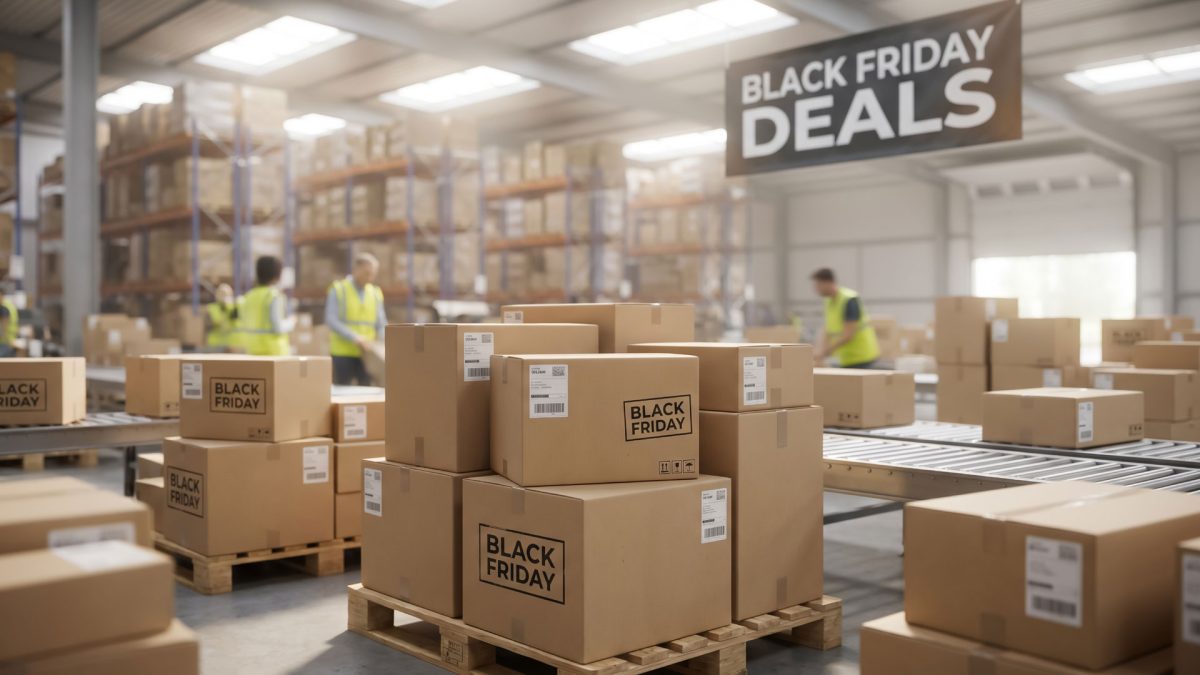
Black Friday rarely feels like a single-day event for an ecommerce brand. Long before the sale goes live, inventory starts moving, warehouse activity intensifies, and fulfillment teams prepare for a sharp change in order patterns. Once demand picks up, even a small gap in inventory availability, warehouse capacity, or shipping coordination can quickly turn into delayed orders and missed delivery expectations.
The real challenge is not simply handling more orders. It is keeping every part of the fulfillment operation moving at the same pace when order volumes rise rapidly. From inventory positioning and warehouse readiness to labor, technology, transportation, and returns, every link needs to be prepared for the pressure of peak season.
That makes Black Friday fulfillment a planning exercise that starts well before the first order is placed. With the right infrastructure and a well-planned 3PL strategy, brands can build the capacity and flexibility needed to manage peak demand without compromising speed, accuracy, or customer experience.
10 Ways to Prepare Your Fulfillment Operation for Black Friday
When Black Friday orders start pouring in, fulfillment operations have little room for error. A sudden spike in demand can quickly expose gaps in inventory planning, warehouse capacity, staffing, technology, and shipping. What works during a normal sales period may not hold up when order volumes surge within hours. The key is to prepare before the peak arrives. These strategies can help brands build a more flexible fulfillment operation, handle higher order volumes, and keep orders moving accurately and efficiently throughout the Black Friday rush.
1. Start With Demand Forecasting, Not Last-Minute Capacity
Peak fulfillment problems typically stem from poor demand forecasting, especially during Black Friday sales when sudden spikes in orders across various products and channels occur. Using only average monthly sales data can result in overstocked SKUs and stockouts of high-demand items. Brands should analyze:
- Previous Black Friday and holiday order volumes
- SKU-level sales history
- Promotional performance
- Average order value and units per order
- Regional demand patterns
- Return rates
- Channel-specific order trends
Combining historical data with demand forecasting can assist in estimating the necessary inventory and fulfillment capacity. Modern peak-season fulfillment services can provide operational flexibility to adapt to demand fluctuations. XPDEL uses inventory optimization, analytics, and demand forecasting to help brands align inventory with demand and manage seasonal volume.
2. Position Inventory Closer to Customer Demand
The placement of inventory impacts both the speed of order fulfillment and the expenses associated with shipping. Centralizing inventory in one location may be effective during regular times, but Black Friday highlights the drawbacks, such as longer shipping times and increased strain on a single warehouse. A distributed fulfillment strategy enables brands to place inventory nearer to key customer regions, facilitating quicker deliveries and evenly distributing order loads across multiple facilities. When assessing ecommerce 3PL fulfillment services, brands should consider fulfillment center locations in addition to storage capacity, technology, labor availability, carrier connectivity, and delivery coverage. XPDEL operates a network of fulfillment centers across North America, providing nationwide coverage and supporting same-day, next-day, and two-day delivery.
3. Make Warehouse Capacity Peak-Ready
A warehouse that performs well with standard order volumes may struggle when orders multiply within a few hours.Before Black Friday, fulfillment operations should assess:
- Available storage space
- Pick-and-pack capacity
- Packing stations
- Equipment availability
- Receiving capacity
- Shipping dock capacity
- Labor requirements
- High-volume SKU locations
- Returns processing capacity
The goal is not simply to add more space. It is to create a warehouse workflow that can absorb additional volume without creating bottlenecks.
Experienced 3PL warehouse services can provide access to established facilities, fulfillment infrastructure, trained teams, and scalable operational capacity without requiring brands to expand their own warehouse footprint.
4. Use Technology to Keep Inventory and Orders Visible
During Black Friday, outdated inventory data can lead to operational issues. Customers may order items that seem available online but are already reserved, leading to cancellations, backorders, delays, and negative experiences, especially at high volumes where minor inventory errors are magnified. Technology should enable transparency in inventory, order processing, shipments, and fulfillment metrics.
XPDEL uses live dashboards to provide visibility into inventory, orders, shipments, and performance metrics. Its technology stack also includes WMS capabilities for order accuracy and TMS capabilities to help select shipping methods. This visibility is particularly important for brands relying on ecommerce fulfillment services during busy promotional times.
5. Prepare Labor Before the Surge
More orders require more than warehouse space. They require enough people to receive inventory, replenish locations, pick orders, pack shipments, manage exceptions, and process returns. Waiting until Black Friday arrives to address labor shortages can create immediate bottlenecks. Peak planning should include:
- Forecasted order volume by day
- Required staffing levels
- Shift planning
- Cross-training
- Temporary labor requirements
- Productivity targets
- Backup staffing plans
Experienced peak season 3PL services can provide operational resources that scale with seasonal requirements, helping brands avoid carrying permanent infrastructure for temporary demand.
6. Optimize Pick, Pack, and Ship Workflows
Speed during Black Friday depends on fulfillment center operations, with high-volume SKUs strategically placed to minimize travel, picking processes aligned with order patterns, and packing stations stocked in advance to handle increased demand. Packaging also deserves attention. Oversized packaging can increase shipping costs and consume warehouse space, while insufficient packaging can increase damage and returns.
XPDEL’s fulfillment services include order accuracy, order tracking, right-sized packaging, logistics planning, and on-demand runs designed to accommodate seasonal requirements.
7. Build Carrier Capacity into the Plan
A fulfillment center can rapidly process orders, but the overall customer experience relies on post-warehouse processes. Black Friday planning should consider carrier capacity, shipping cutoffs, service levels, regional coverage, and contingency plans. Offering multiple delivery options can help brands optimize between speed and cost. A connected fulfillment operation can coordinate warehouse processing with transportation decisions rather than treating fulfillment and shipping as separate activities. XPDEL supports multiple carrier and logistics integrations and uses TMS capabilities to help determine shipping methods.
8. Prepare for Returns Before They Arrive
Black Friday fulfillment does not end when the package reaches the customer. Holiday promotions can generate significant return activity in the weeks following the sale. If reverse logistics is not planned, returned products can accumulate quickly and create inventory inaccuracies. A complete peak strategy should define:
- Return authorization processes
- Customer pickup or drop-off options
- Inspection procedures
- Restocking rules
- Disposition decisions
- Refund workflows
- Return inventory visibility
XPDEL supports home pickup and drop-off returns along with different disposition options, helping integrate reverse logistics into the fulfillment process.
9. Test Every Integration Before Black Friday
A fulfillment network depends on more than warehouse operations. Ecommerce platforms, marketplaces, ERP systems, WMS, payment systems, order management platforms, and carriers need to exchange information accurately. Before the peak season begins, brands should test:
- Order transmission
- Inventory synchronization
- Shipping updates
- Tracking notifications
- Cancellation workflows
- Returns
- Carrier integrations
- Exception handling
XPDEL provides comprehensive support for seamless integrations across a wide range of ecommerce platforms as well as various enterprise systems, enabling businesses to optimize their operations and improve overall efficiency.
10. Choose a 3PL That Can Scale Beyond Black Friday
Black Friday is only one part of the holiday fulfillment cycle. Cyber Monday, Christmas, New Year promotions, product launches, and other seasonal events can continue generating elevated order volumes. Choosing a 3PL for ecommerce should therefore be about more than short-term warehouse capacity. Brands should evaluate whether a provider can support:
- D2C and B2C fulfillment
- B2B distribution
- Multi-channel fulfillment
- Inventory optimization
- Technology integration
- Scalable warehouse operations
- Transportation management
- Returns
- Seasonal capacity
This is where Black Friday 3PL fulfillment, holiday fulfillment services, and holiday season 3PL solutions can provide greater flexibility than operating an entirely fixed fulfillment model.
Conclusion
Black Friday rewards brands that prepare before demand arrives. Accurate forecasting, strategically positioned inventory, scalable warehouse capacity, trained labor, integrated technology, reliable transportation, and efficient returns can determine whether a fulfillment operation absorbs peak volume or becomes overwhelmed by it.
For growing D2C and B2C brands, the right 3PL fulfillment services can turn seasonal complexity into scalable capacity. XPDEL provides multi-channel fulfillment for D2C, B2B, and retail operations, supported by fulfillment centers, advanced technology, live visibility, inventory optimization, transportation capabilities, and returns management.
With the right Black Friday fulfillment services strategy in place, brands can prepare for higher order volumes while keeping fulfillment accurate, responsive, and customer-focused throughout the holiday season.
The objective is simple: prepare the operation before the orders arrive, so peak demand becomes an opportunity to scale—not a reason to slow down.
About XPDEL
XPDEL provides technology-driven fulfillment services for D2C, B2B, and retail brands across North America. Its strategically positioned fulfillment network, inventory optimization, transportation capabilities, and real-time visibility help businesses manage orders across channels. With scalable operations and integrated technology, XPDEL supports brands through everyday demand as well as peak periods such as Black Friday and the holiday season.
Frequently Asked Questions (FAQs)
Q1. What warehouse factors should brands review before Black Friday?
Ans. Brands should assess storage space, pick-and-pack capacity, packing stations, equipment, receiving and shipping dock capacity, labor availability, and returns processing capacity to make sure the warehouse can absorb higher volumes without bottlenecks.
Q2. How does technology help during peak fulfillment periods?
Ans. Live dashboards and WMS/TMS integrations give brands real-time visibility into inventory, orders, and shipments. This reduces errors like overselling out-of-stock items, which become more costly and disruptive at high order volumes.
Q3. How should brands plan for labor during Black Friday?
Ans. Labor planning should include forecasted order volume by day, required staffing levels, shift scheduling, cross-training, and backup staffing plans so warehouse teams aren’t scrambling to keep pace once order volume surges.
Q4. What should brands test before Black Friday goes live?
Ans. Brands should test order transmission, inventory sync, shipping and tracking updates, cancellation workflows, and carrier integrations across their ecommerce platform, ERP, WMS, and order management systems to catch issues before peak demand hits.
Q5. How is Black Friday fulfillment different from everyday order fulfillment?
Ans. Everyday fulfillment usually runs on predictable volume, while Black Friday compresses months of demand into a few days. It requires added inventory buffers, temporary labor, expanded warehouse throughput, and tighter coordination between systems and carriers.
