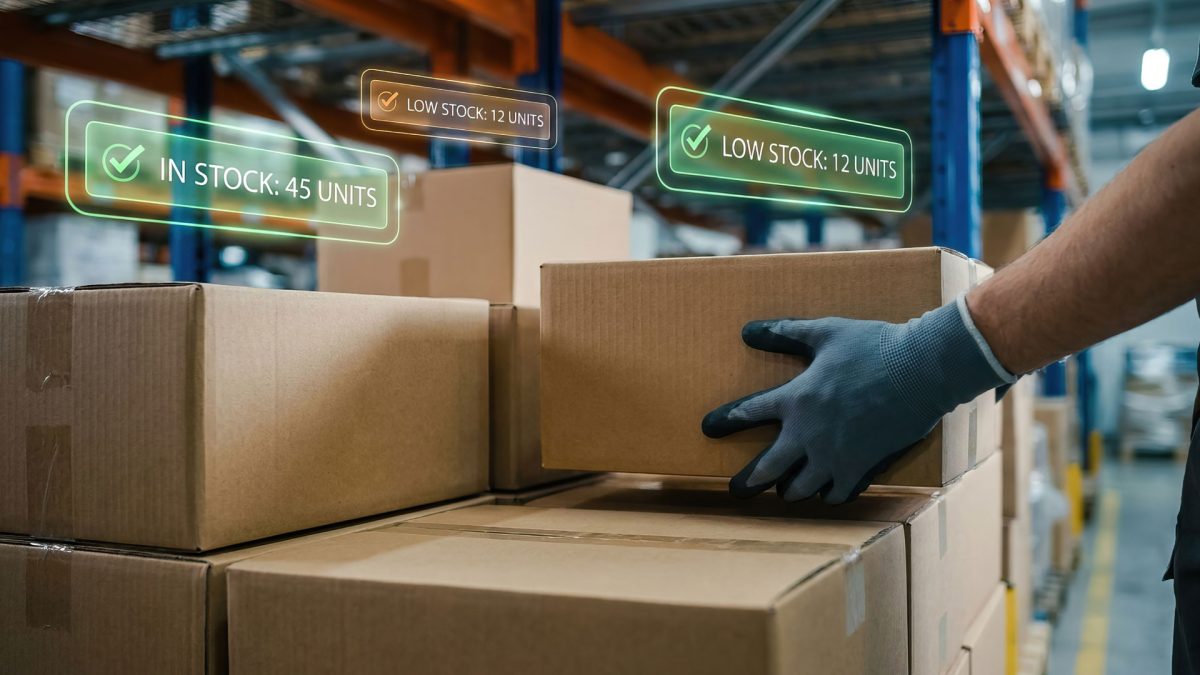
Managing inventory is increasingly difficult due to unpredictable consumer demand, irregular seasonal spikes, and supply chain disruptions, making traditional methods like historical sales data and spreadsheets insufficient for eCommerce brands, retailers, and manufacturers. This is where Predictive Inventory Management changes the game.
Predictive models enable businesses to forecast demand, optimize inventory, and make proactive replenishment decisions, reducing stock shortages or excess. Using AI, machine learning, and advanced analytics, companies can enhance inventory accuracy, lower costs, and boost customer satisfaction.
Predictive inventory strategies enable modern fulfillment providers to build faster, more responsive supply chains capable of supporting high-volume, multi-channel commerce. By combining intelligent forecasting with distributed fulfillment networks, businesses can position inventory closer to customers while improving delivery speed and operational efficiency.
What is Predictive Inventory Management?
Inventory decisions can no longer rely on guesswork or static reorder rules. As customer demand becomes more volatile and supply chains grow increasingly complex, businesses need a smarter, data-driven approach to inventory planning. That’s where Predictive Inventory Management comes in.
Predictive Inventory Management uses historical sales data, customer buying patterns, market trends, seasonality, supplier performance, and real-time operational insights to forecast future inventory demand with greater accuracy. Instead of reacting to shortages or excess inventory after they occur, businesses can anticipate demand shifts, optimize replenishment schedules, and make proactive inventory decisions.
Powered by advanced Inventory Forecasting Software, predictive models continuously analyze changing conditions to recommend when to reorder, how much inventory to stock, which SKUs are likely to experience demand fluctuations, and where inventory should be positioned to support faster fulfillment. The result is a more agile inventory strategy that reduces stockouts, minimizes excess inventory, improves working capital, and ensures products are available exactly when and where customers need them.
Why Traditional Inventory Planning Falls Short?
Traditional inventory planning was built for a time when demand patterns were relatively predictable and supply chains were far less complex. Most businesses relied on historical sales averages, fixed reorder points, and manual forecasting to determine inventory levels. While these methods may have been effective in the past, they struggle to keep pace with today’s fast-moving business environment.
Modern supply chains are influenced by constantly changing customer demand, omnichannel sales, promotional campaigns, fluctuating supplier lead times, global disruptions, and rising warehousing and transportation costs. These variables can shift overnight, making static forecasting models unreliable and leaving businesses unprepared for sudden changes.
Without accurate Inventory Demand Forecasting, companies often find themselves reacting to problems instead of preventing them. The result is a cycle of stockouts that lead to lost sales, excess inventory that ties up working capital, expensive emergency replenishment, slow-moving or obsolete stock, and declining customer satisfaction.
Beyond the immediate financial impact, these challenges reduce operational efficiency, strain supply chain resources, and make it harder for businesses to remain competitive in an increasingly dynamic market. Predictive, analytics-driven forecasting is no longer a competitive advantage—it’s becoming a necessity for organizations looking to balance inventory costs with exceptional customer service.
The Four Pillars of Analytics-Driven Inventory Forecasting
Accurate forecasting is only one part of effective inventory management. To consistently maintain the right inventory levels while controlling costs, businesses need a strategy that combines predictive insights with intelligent execution. Analytics-Driven Inventory Management is built on four core capabilities that help organizations forecast demand, optimize inventory, automate replenishment, and proactively manage risk.
- Real-Time Demand Forecasting: Modern inventory demand forecasting involves analyzing real-time operational and market data, including customer behavior, promotions, seasonality, geography, product life cycles, supplier performance, and market trends, to produce highly accurate demand predictions beyond just historical sales analysis.
Unlike traditional forecasting methods that produce static monthly forecasts, today’s Inventory Forecasting Software continuously updates recommendations as new data becomes available. This enables businesses to respond to changing demand patterns before they result in stock shortages or excess inventory, creating a more agile and responsive supply chain.
- Intelligent Inventory Optimization: Inventory Optimization leverages predictive insights to identify the optimal stock levels for each SKU across warehouses and fulfillment centers, ensuring inventory is aligned with customer demand for efficient fulfillment. Optimization models tailor inventory policies to factors like demand variability, lead times, safety stock, costs, capacity, transportation, and service levels, resulting in balanced stock levels that reduce excess while ensuring availability. In multi-location networks, this approach also shortens shipping distances, cuts logistics costs, and enhances delivery performance.
When combined with a distributed fulfillment network, inventory optimization also improves inventory placement across multiple locations, reducing shipping zones, lowering transportation costs, and enabling faster delivery to end customers.
- Automated Inventory Replenishment Planning: Manual replenishment processes are typically slow, reactive, and error prone. Predictive Inventory Replenishment Planning uses dynamic, data-driven recommendations that automatically adjust to fluctuations in demand and supply, replacing fixed reorder points.
Using predictive analytics, modern systems automatically recommend when to replenish inventory, how much to order, which suppliers to prioritize, and whether inventory should be redistributed between fulfillment locations. This automation reduces administrative effort, minimizes stockouts, and ensures inventory remains aligned with actual demand without requiring planners to manually monitor every SKU.
- Proactive Inventory Risk Management: Effective inventory planning isn’t just about predicting demand—it’s also about anticipating disruptions before they affect operations. Inventory Risk Management leverages predictive analytics to identify vulnerabilities across the supply chain, giving businesses time to act before small issues become costly problems.
Predictive systems monitor supplier reliability, transportation delays, seasonal changes, demand spikes, excess inventory, and obsolescence to provide early warnings, allowing operations teams to proactively adjust purchasing, inventory, and fulfillment strategies, thereby reducing risks and maintaining service quality.
How AI Is Transforming Inventory Management?
Artificial intelligence has fundamentally changed how businesses forecast, plan, and control inventory. Unlike traditional forecasting models that rely on fixed rules and historical averages, modern AI Inventory Management platforms continuously learn from operational data, refining their predictions as market conditions evolve.
AI can identify complex demand patterns that conventional forecasting methods often overlook, including weather-driven purchasing behavior, regional demand variations, promotional impacts, product substitution trends, and marketplace fluctuations. As these systems process more data over time, forecasting accuracy continues to improve, enabling businesses to make faster, smarter inventory decisions with greater confidence.
Predictive insights become even more valuable when forecasting systems are connected with warehouse operations, transportation planning, and order fulfillment, allowing businesses to execute inventory decisions in real time rather than simply predicting them.
The Role of Machine Learning in Inventory Forecasting
As supply chains become more dynamic, traditional forecasting models are no longer enough to keep inventory aligned with customer demand. This is why many organizations are turning to Inventory Optimization Using Machine Learning to improve forecasting accuracy and make smarter inventory decisions.
Machine learning differs from traditional models by continuously analyzing vast operational data to identify hidden patterns, considering factors like customer behavior, inventory, seasonal demand, supplier reliability, market trends, order frequency, and product movement, and updating its predictions with new information.
Rather than generating the same forecast month after month, machine learning adapts to changing business conditions in real time. This enables businesses to respond faster to shifts in demand, reduce forecasting errors, and make proactive replenishment decisions. As a result, Forecasting Inventory Demand with Data Analytics becomes far more accurate than traditional spreadsheet-based planning, helping organizations minimize stockouts, avoid excess inventory, and improve overall supply chain performance.
Machine learning helps fast-growing eCommerce brands and multi-channel retailers by optimizing inventory use, lowering costs, enhancing order fulfillment, and ensuring product availability. It turns inventory planning into a strategic tool that boosts efficiency and supports long-term growth.
Why Predictive Supply Chain Software Matters
Inventory planning doesn’t operate in isolation—it influences every stage of the supply chain, from procurement and warehousing to transportation and customer delivery. When demand forecasts are inaccurate, the impact extends far beyond inventory levels, leading to delayed replenishment, inefficient warehouse operations, higher transportation costs, and inconsistent customer experiences.
Modern Predictive Supply Chain Software bridges the gap between inventory planning and fulfillment by providing end-to-end visibility across inventory availability, purchase orders, warehouse capacity, order volumes, supplier lead times, and shipping performance.
This visibility also enables businesses to coordinate inventory, fulfillment, and transportation across multiple facilities, creating a more resilient and scalable logistics network. The result is a more agile supply chain that improves operational efficiency, accelerates order fulfillment, and enhances delivery performance.
How XPDEL Supports Smarter Inventory Planning?
XPDEL combines predictive inventory visibility with a strategically distributed fulfillment network, enabling businesses to position inventory closer to demand and execute fulfillment more efficiently. Through real-time inventory tracking, intelligent inventory allocation, warehouse management technology, and multi-node fulfillment capabilities, businesses gain greater control over inventory while improving delivery performance and reducing fulfillment costs.
By combining predictive inventory planning with strategically located fulfillment centers, businesses can reduce shipping distances, improve inventory availability, accelerate order processing, and maintain high service levels during seasonal demand fluctuations.
XPDEL’s fulfillment network supports inventory storage, intelligent inventory allocation, order processing, pick-and-pack operations, transportation, returns management, and marketplace integrations through a connected technology platform. Together, these capabilities help businesses transform predictive inventory insights into faster execution, greater inventory accuracy, and a more agile supply chain.
Conclusion:
Inventory management is evolving from reactive to predictive strategies, enabling businesses to enhance forecast accuracy, cut excess stock, prevent stockouts, optimize working capital, and adapt swiftly to customer demand.
Advances in AI, machine learning, and analytics will enhance inventory forecasting accuracy, allowing businesses to make quicker, more confident supply chain decisions. For eCommerce brands, competitive edge depends on effectively positioning the right inventory at the right place and time, beyond just the products they offer.
Businesses that combine predictive forecasting with technology-enabled fulfillment are better positioned to reduce inventory costs, improve delivery performance, and respond faster to changing customer demand. By connecting predictive planning with scalable warehouse operations, intelligent inventory management, and distributed fulfillment, XPDEL helps businesses translate forecasting insights into measurable supply chain performance.
About XPDEL:
XPDEL is a technology-driven 3PL provider helping electronics brands streamline eCommerce fulfillment with distributed fulfillment centers, real-time inventory visibility, reliable last-mile delivery, and efficient returns management — designed to support faster scaling and better customer experiences across the U.S.
Frequently Asked Questions (FAQs)
Q1. What role does machine learning play in inventory forecasting?
Ans1. Machine learning continuously analyzes data like customer behavior, seasonal trends, and supplier reliability to refine predictions over time, making forecasts more accurate than static, spreadsheet-based methods that don’t adapt to changing conditions.
Q2. How does predictive inventory management reduce costs?
Ans2. By accurately matching stock levels to actual demand, businesses avoid the costs of emergency replenishment, excess warehousing, and obsolete inventory, while also freeing up working capital that would otherwise be tied up in overstock.
Q3. Can predictive inventory management help prevent stockouts?
Ans3. Yes. By forecasting demand fluctuations before they happen and automating replenishment recommendations, predictive systems help ensure popular SKUs stay in stock, reducing lost sales and improving customer satisfaction.
Q4. Is predictive inventory management only useful for large enterprises?
Ans4. No. Fast-growing eCommerce brands and multi-channel retailers of any size can benefit, since predictive tools scale with business needs and help smaller operations compete by optimizing inventory without requiring large manual planning teams.
Q5. What is inventory risk management, and why does it matter?
Ans5.Inventory risk management uses predictive analytics to flag potential disruptions—like supplier delays or demand spikes—before they impact operations, giving businesses time to adjust purchasing and fulfillment strategies proactively rather than reactively.
