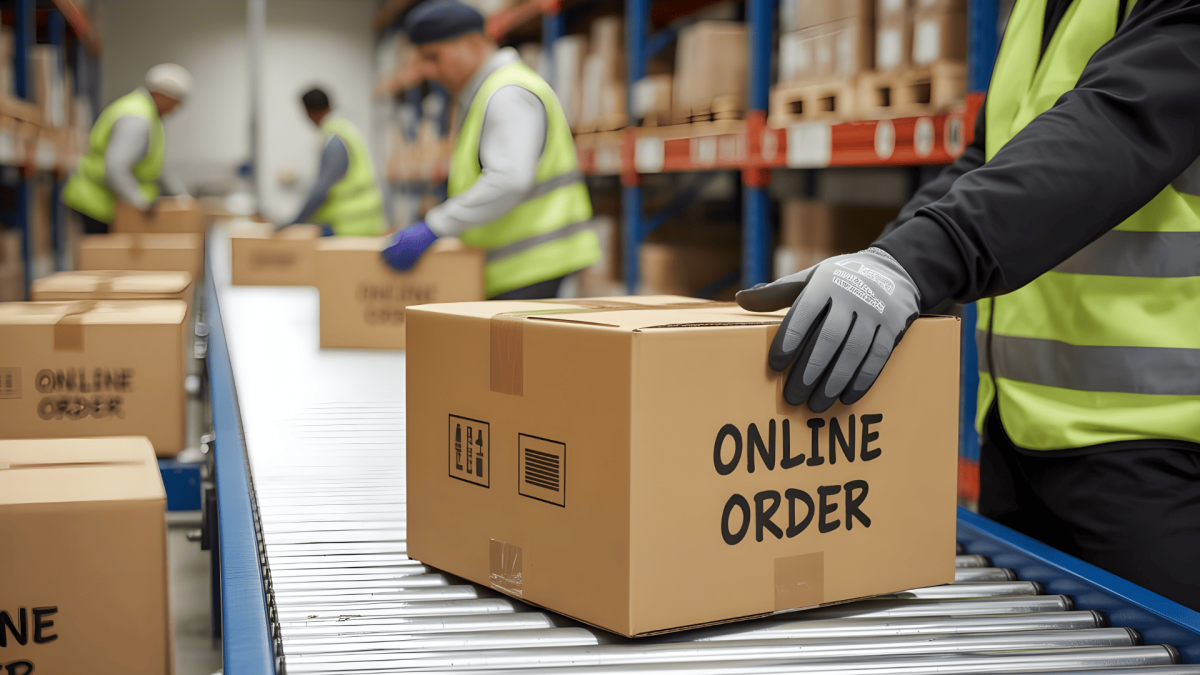
In recent years, more people have started shopping online because it’s easier and faster. This change is due to better technology, more products to choose from, and people wanting things to arrive quickly. One of the most critical yet often overlooked components of online shopping is logistics. It ensures products are stored, processed, and delivered efficiently.
Global eCommerce has rapidly expanded due to increased digital use, mobile shopping, and changing consumer preferences, leading to higher customer demands for quick, reliable deliveries within 24-48 hours. This has heightened supply chain complexity and made efficient eCommerce logistics essential for business success.
A well-coordinated logistics system supports successful online orders by managing inventory, fulfilling orders, delivering to customers, and handling returns efficiently. Modern logistics providers function as strategic partners, utilizing technologies like Warehouse Management Systems (WMS), real-time tracking, and route optimization to help eCommerce brands expand, reduce costs, and improve customer satisfaction.
Understanding eCommerce Distribution and Logistics Ecosystems
eCommerce distribution encompasses storing, managing, and delivering products purchased online through various stages such as warehousing, inventory control, order processing, packaging, and transportation.
Logistics companies play a critical role in linking sellers, marketplaces, and consumers, serving as the backbone of distribution by integrating systems, streamlining processes, and coordinating all stages smoothly.
Partnering with eCommerce fulfillment services in the USA enables businesses in competitive markets like the United States to achieve faster delivery and expand market reach through strategically located US fulfillment centers.
Inventory Management & Inventory Control in eCommerce
eCommerce inventory management involves monitoring stock levels, locations, and sales across channels to balance product availability and storage costs. It aims to prevent overstocking and overselling, reduce deadstock, and improve customer satisfaction through automated tracking and demand forecasting using RFID, barcode scanning, and software, often in collaboration with third-party logistics providers. Key capabilities include:
- 1. Demand Forecasting: Analyzing past sales and trends to forecast future demand and identify optimal reorder times to avoid stockouts.
- 2. Real-time stock visibility: Providing precise visibility into stock levels across locations.
- 3. Automated Replenishment: Maintaining optimal stock levels continuously to ensure that inventory is neither overstocked nor understocked, thereby supporting seamless operations and meeting customer demand efficiently.
Logistics providers help businesses choose between centralized and distributed inventory models. Centralized inventory model offers lower complexity but slower delivery, while distributed inventory model enables faster shipping and lower last-mile costs. The right strategy helps eCommerce brands improve efficiency, reduce waste, and boost customer satisfaction.
Warehouse Operations Powered by Warehouse Management Systems (WMS)
A Warehouse Management System (WMS) is a software that streamlines warehouse operations by automating inventory management, receiving, storage, and order processing. It boosts efficiency, reduces costs, and improves accuracy through real-time data, barcode scanning, and analytics, making warehouses more productive and data-driven.
A robust WMS facilitates real-time inventory monitoring, automation of picking, packing, and sorting, and efficient storage allocation. It reduces human errors and enhances accuracy. Automation and intelligent workflows lead to faster processing and higher order precision, crucial for high-volume B2C and B2B logistics. Smart warehousing enables scalability to manage seasonal peaks and rapid growth without disruptions.
Order Fulfillment: From Click to Delivery
Order fulfillment involves receiving, packing, and shipping customer orders, crucial for eCommerce success. The process starts with order confirmation and inventory check, then moves to picking and packing, and ends with shipping. Logistics companies enhance this process using automation and system integrations like barcode scanning, warehouse management systems (WMS), and APIs to increase efficiency and accuracy. The stages involved in the order fulfillment lifecycle include:
- 1. Order Confirmation: Once a customer places an order, the system verifies the details and begins processing.
- 2. Picking: Warehouse staff or robotic systems use a pick list to scan items with barcodes or RFID, verify accuracy, and retrieve items from storage shelves.
- 3. Packaging: Items are securely packed with suitable dunnage like bubble wrap or air fill to prevent damage during transit, and the packing process is regularly optimized to minimize dimensional weight and reduce shipping expenses.
- 4. Shipping and Dispatch: Shipping labels are created and attached to packages, often using third-party logistics providers for cost savings. The packages are then handed over to carriers, who generate tracking information and share it with customers.
Logistics companies improve efficiency and speed by using automation, system integrations, and optimized workflows to connect eCommerce platforms with fulfillment systems. This is why many brands partner with an eCommerce fulfillment companies in the USA to handle complex fulfillment requirements efficiently.
Transportation Management & Route Optimization
Transportation management is essential for eCommerce to deliver goods quickly, accurately, and affordably, meeting customer demands. Logistics companies use AI-based route planning, real-time traffic updates, and load balancing to improve efficiency, lower fuel consumption, and minimize empty trips. Tools such as Transportation Management Systems (TMS) and IoT enhance visibility and help reduce last mile expenses.
Route optimization allows logistics providers to analyze traffic, delivery points, and real-time data to find the most efficient routes, improving delivery speed and reducing fuel and operational costs. These strategies are vital for businesses to stay competitive in the fast-moving eCommerce industry.
Real-Time Tracking & Visibility
As eCommerce continues to grow, visibility has become a critical part of the customer experience. Today’s buyers want to know exactly where their orders are and when they will arrive, making real-time tracking an essential component of logistics operations.
To meet these expectations, logistics companies provide continuous shipment updates, clear delivery timelines, and timely alerts at every stage. This consistent communication keeps customers informed and reduces uncertainty throughout the delivery process.
Such transparency plays a key role in building trust and strengthening long-term customer relationships. It also allows businesses to respond quickly to any delays or disruptions, minimizing their impact.
By leveraging advanced technology platforms, tracking information is seamlessly integrated across systems, ensuring that both businesses and customers always have access to accurate and up-to-date delivery insights.
Benefits of Partnering with a Logistics Company
Partnering with a professional logistics provider provides multiple benefits for eCommerce businesses such as:
- 1. Cost Efficiency: Logistics companies reduce costs by utilizing economies of scale, bulk shipping discounts, and efficient routing strategies.
- 2. Scalability and Flexibility: Logistics providers can quickly adjust their operations to match changing demand, peak periods, or new markets without heavy infrastructure costs.
- 3. Improved Customer Service: Enhanced delivery speed, reliability, transparency, and real-time tracking boost customer satisfaction, foster loyalty, and strengthen brand reputation./li>
- 4. Reduced Operational Complexity: Outsourcing logistics enables companies to concentrate on key areas such as marketing and product innovation.
- 5. Faster Order Fulfillment: Automation and streamlined workflows lead to faster processing times and reduced errors.
Conclusion:
Logistics companies are essential for efficient eCommerce distribution, covering inventory management, WMS, order fulfillment, transportation, and last-mile delivery to enhance customer experience.
To remain competitive amid evolving eCommerce, businesses should adopt integrated logistics solutions and collaborate with suitable providers to achieve faster delivery, operational efficiency, and growth.
About XPDEL:
XPDEL is a leading technology-driven ecommerce logistics provider that helps brands streamline operations and scale across the United States. With a strong network of USA fulfillment centers, XPDEL delivers end-to-end order fulfillment, advanced inventory management, efficient last-mile delivery, and integrated B2C & B2B logistics services—enabling faster deliveries, lower costs, and superior customer experiences.
Frequently Asked Questions (FAQs)
Q-1: What role do logistics companies play in eCommerce distribution?
Ans. Logistics companies handle inventory management, order fulfillment, transportation, and last-mile delivery to ensure products move smoothly and promptly from warehouses to customers.
Q-2: How does a Warehouse Management System (WMS) improve operations?
Ans. A WMS improves accuracy and efficiency through automation of inventory management, order processing, and warehouse operations, providing real-time data visibility.
Q-3: Why is real-time tracking important in eCommerce logistics?
Ans. Real-time tracking enhances shipment visibility, builds customer trust, and allows businesses to proactively address delays or disruptions.
Q-4: How does route optimization benefit last-mile delivery?
Ans. Route optimization reduces delivery times, decreases transportation costs, and enhances efficiency by determining the most efficient routes.
Q-5: Why should businesses partner with eCommerce fulfillment companies in the USA?
Ans. Partnering with US fulfillment centers provides quicker deliveries, scalable operations, and cost-effective logistics solutions for B2C and B2B businesses.
